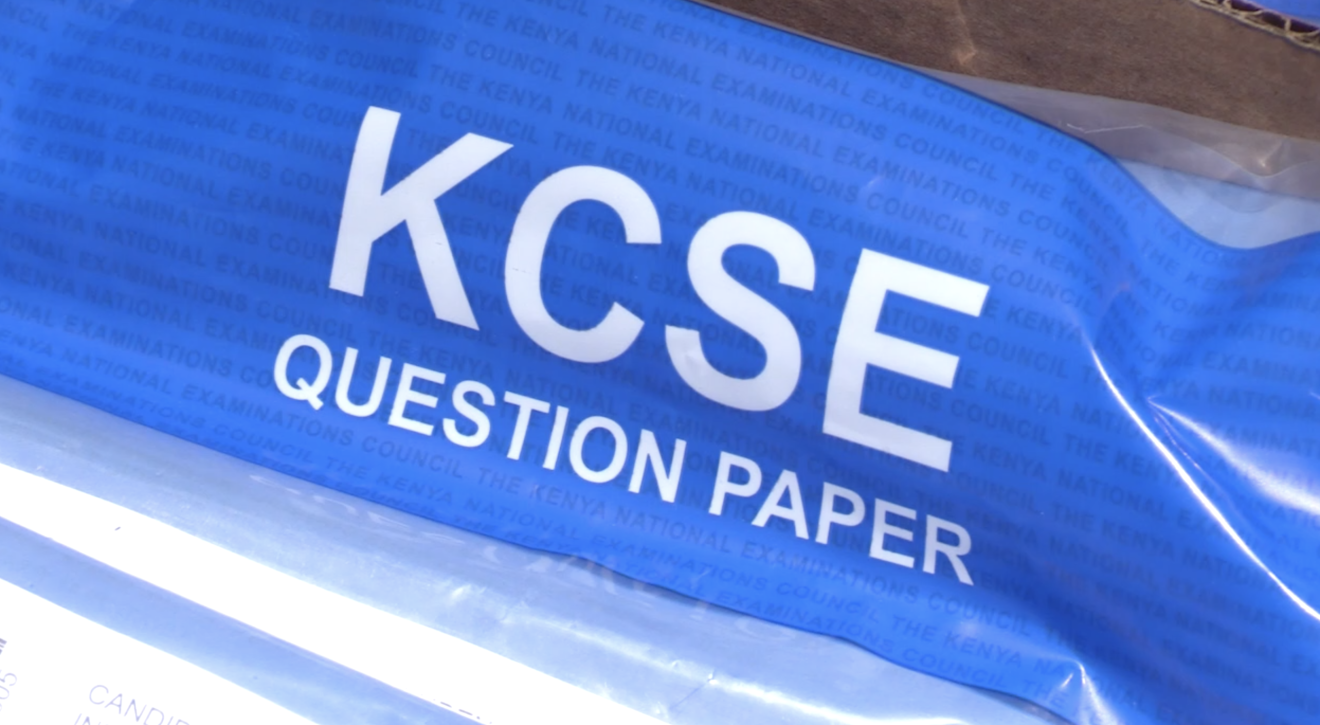

How KNEC works out the KCSE mean grade
KCSE
The seven subjects that count, and the letter scale in the 2024 KCSE regulations.
Two rules, not one
When you look at the 2024 revised regulations from the Kenya National Examinations Council (KNEC), you will find two distinct rules that should not be confused. One rule governs what you must register for and sit in the examination room. The other rule governs how KNEC calculates your final mean grade on your certificate.
Under section 4.2 of the regulations, a candidate must sit at least seven subjects and may sit a maximum of nine subjects. However, under section 17, the mean grade is always calculated from exactly seven subjects. Sitting eight or nine subjects gives you additional options when the mean grade is compiled, but it does not change the seven-subject base of the final calculation.
Registration and the 2026 dates are on the KCSE guide.
Subjects you must enter
Section 4.2 sets out the subject combinations required for registration.
For sighted candidates, the regulations outline two possible paths:
The first path requires:
- English (101), Kiswahili (102), and Mathematics Alternative A (121).
- At least two sciences selected from Biology (231), Physics (232), and Chemistry (233).
- At least one humanities subject from Group 3: History and Government (311), Geography (312), or one religious education subject chosen from Christian Religious Education (313), Islamic Religious Education (314), and Hindu Religious Education (315). Only one religious education subject may be taken.
- One additional subject chosen from the remaining subjects in groups 2, 3, 4, and 5.
- Any extra one or two subjects, bringing your total entry up to eight or nine, must come from Group 3, Group 4, or Group 5.
The second path for sighted candidates replaces Mathematics Alternative A with Mathematics Alternative B (122) and takes General Science (237) instead of the separate sciences. Candidates on this path must also take at least one Group 3 subject and two further subjects selected from Group 3, Group 4, and Group 5.
For candidates who are blind, the entry rules specify:
- English (101), Kiswahili (102), and Mathematics Alternative A (121).
- Biology for the Blind (236).
- At least one Group 3 subject.
- Two additional subjects chosen from the remaining Group 3 subjects, Home Science (441) or Agriculture (443), and Group 5.
The subjects listed in the regulations are organized into five distinct groups:
- Group 1: English (101), which is compulsory for all candidates; Kiswahili (102), which is compulsory for all hearing candidates; and either Mathematics Alternative A (121) or Mathematics Alternative B (122). Only one mathematics option may be taken.
- Group 2: Biology (231), Physics (232), Chemistry (233), Biology for the Blind (236, reserved for blind candidates), and General Science (237, taken only with Mathematics Alternative B).
- Group 3: History and Government (311), Geography (312), Christian Religious Education (313), Islamic Religious Education (314), and Hindu Religious Education (315). Between the three religious education subjects (313, 314, and 315), only one may be taken.
- Group 4: Home Science (441), Art and Design (442), Agriculture (443), Woodwork (444), Metalwork (445), Building Construction (446), Power Mechanics (447), Electricity (448), Drawing and Design (449), Aviation Technology (450), and Computer Studies (451).
- Group 5: French (501), German (502), Arabic (503), Kenyan Sign Language (504, reserved for candidates with hearing impairment), Music (511), and Business Studies (565).
Candidates may sit a maximum of nine subjects across these groups.
How the mean grade uses seven subjects
Section 17 of the regulations details how your mean grade is compiled once scoring is complete:
- Under section 17.1, the mean grade for regular candidates is based on Mathematics, the best performed language between English and Kiswahili, and the best performed five other subjects.
- Under section 17.2, the mean grade for candidates with hearing impairment is based on Mathematics, the best performed language between English and Kenyan Sign Language, and the best performed five other subjects.
- Under section 17.3, if English is chosen as the best performed language, and Kiswahili or Kenyan Sign Language ranks among your best five remaining subjects, that Kiswahili or Kenyan Sign Language grade is included in the five.
- Under section 17.4, if Kiswahili is chosen as the best performed language, and English or Kenyan Sign Language ranks among your best five remaining subjects, that English or Kenyan Sign Language grade is included in the five.
- Under section 17.5, every subject you sit appears on your result slip and certificate, regardless of whether it was selected among the seven subjects used for the mean grade.
The letter scale
Section 17.6 defines the twelve-point grading scale used by KNEC. Each grade corresponds to a percentage band and carries a specific descriptive term where assigned by the regulations:
- 12 points: Grade A (above 79 percent), Very Good
- 11 points: Grade A minus (75 to 79 percent)
- 10 points: Grade B plus (70 to 74 percent)
- 9 points: Grade B (65 to 69 percent), Good
- 8 points: Grade B minus (60 to 64 percent)
- 7 points: Grade C plus (55 to 59 percent)
- 6 points: Grade C (45 to 54 percent), Average
- 5 points: Grade C minus (40 to 44 percent)
- 4 points: Grade D plus (35 to 39 percent)
- 3 points: Grade D (30 to 34 percent), Weak
- 2 points: Grade D minus (25 to 29 percent)
- 1 point: Grade E (below 25 percent), Poor
The regulations do not set a university cut-off, and a grade on this scale is not an offer of a place. Registration and the 2026 dates are on the KCSE guide.
Official facts stay on the KCSE guide.