
Overview
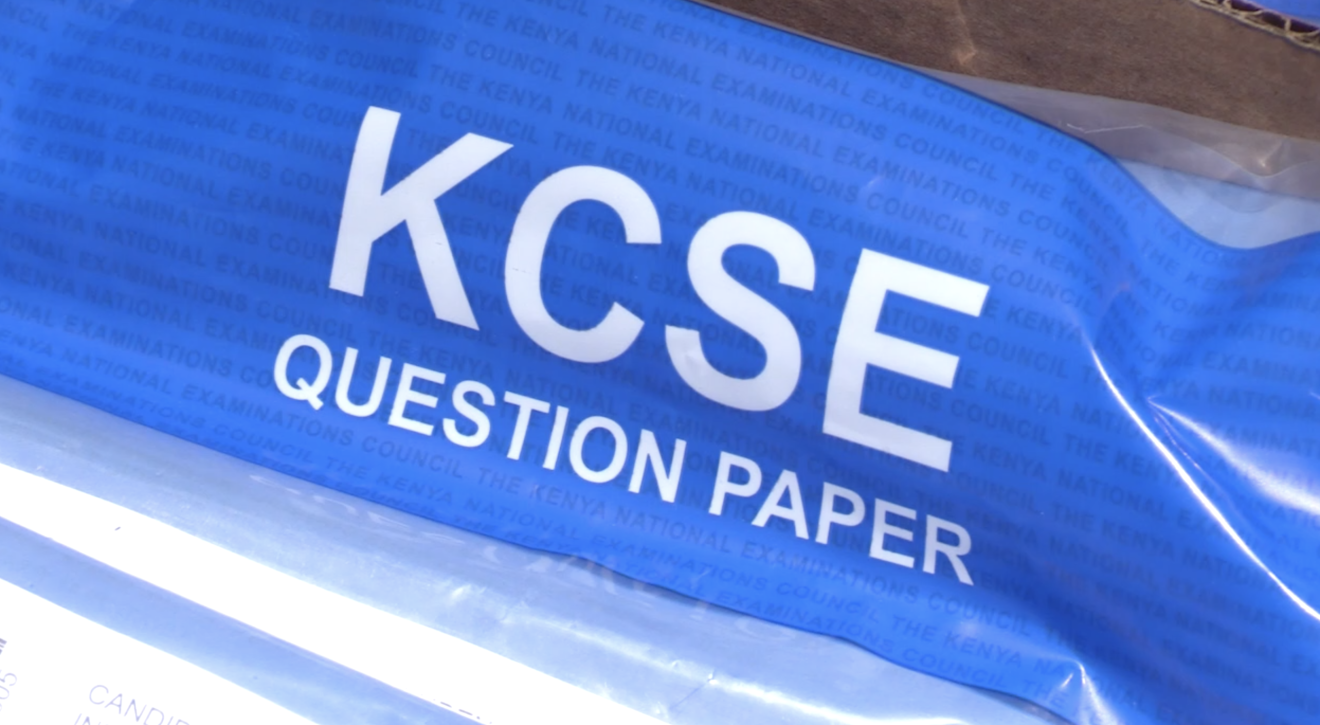
The Kenya Certificate of Secondary Education (KCSE) is the national secondary school exit examination in Kenya, administered by the Kenya National Examinations Council (KNEC). Learn is an academic workspace independent of KNEC, and Learn does not currently offer KCSE practice.
The core regulatory framework governing the examination is the Revised KCSE Regulations (2024 edition), published by KNEC. The Council's 2026 registration circular instructed heads of institutions to adhere strictly to these 2024 regulations, particularly clause 4.0 regarding conditions for the award of certificates, alongside the KNEC Rules and Regulations (2015).
Looking ahead, the Guidelines on the Administration of the 2026 KCSE Qualifying Test (published in June 2026) state that the final KCSE examination series will take place in 2027, after which subsequent secondary assessments will transition to the Competency Based Assessment Framework. This transition timeline appears specifically in the 2026 qualifying test guidelines rather than in the earlier 2024 regulations.
Who may enter
To register as a regular school candidate, a student must hold a Kenya Certificate of Primary Education (KCPE) certificate or a recognised equivalent. A student with a foreign certificate must have that certificate equated before admission to a Kenyan secondary school.
School candidates must be entered for at least seven subjects in accordance with section 4.2 of the 2024 regulations. In addition, the student must have pursued continuous study during the three years immediately preceding the examination in a secondary school formally authorized to present KCSE candidates, remaining enrolled in that institution until presented for entry by the school principal.
Private candidates and repeaters follow a different route, covered in private candidates and repeaters.
Registration
Registration for the 2026 KCSE examination opened on 16 February 2026 and closed on 31 March 2026. The registration period for 2026 is now closed.
All registrations were completed strictly online by heads of institutions using the council's designated centre portal. A candidate's submitted name had to match the wording on their KCPE certificate exactly. Each candidate required an uploaded photograph measuring 300 by 300 pixels, which cannot be adjusted or replaced once registration concludes. School heads were also required to declare all repeating students at the time of entry. Registering non-existent or ineligible candidates constitutes examination malpractice and exposes a school to the risk of centre deregistration.
Funding policies vary by candidate category. According to the Registration Circular for the 2026 KCSE Examination (issued in February 2026), the Government of Kenya, through the Ministry of Education, covers the examination fees for regular candidates in both public and private schools. However, this state funding excludes three specific groups: candidates re-sitting the examination, non-citizens, and private candidates registering at sub-county private examination centres. Candidates belonging to these three groups must pay the examination fee specified in the registration circular through the eCitizen platform. You should always consult the official 2026 circular to verify the applicable fee schedule before making any payments.
The regulatory documents contain conflicting requirements regarding minimum centre enrollment:
- The Revised KCSE Regulations (2024 edition) specify that an examination centre must have a minimum of 15 registered candidates, unless the institution pays the equivalent entry costs for 15 candidates.
- The Registration Circular for the 2026 KCSE Examination states that schools with fewer than 10 candidates are not permitted to register as independent centres and must instead be hosted at an approved centre with more than 10 candidates. It also states that examination centres with fewer than 30 candidates shall be hosted.
Schools established for learners with special needs and government correctional facilities are formally exempt from the 10-candidate and 30-candidate hosting requirements outlined in the 2026 circular.
Exam format
Under the 2024 regulations, candidates register for a minimum of seven and a maximum of nine subjects.
Daily sitting times are fixed by the 2026 KCSE timetable (reference KNEC/TD/SE/KCSE/TT/26/005). First-session examinations begin promptly at 8.00 a.m., while second-session papers start at 2.00 p.m. KNEC permits no extra time under standard conditions. If an inconsistency arises between the duration printed on the question paper and the timetable, the duration printed on the question paper takes precedence. Reading time is counted within the overall time allowed on the question paper unless explicit instructions on the cover state otherwise.
Six technical and practical subjects require extensive project work: Art and Design, Agriculture, Woodwork, Metalwork, Building Construction, and Computer Studies. In the 2026 cycle, these projects ran over a seven-month period from January 2026 through July 2026.
To see how elective subject groups are organized and how individual papers combine into an overall score, review our guide to the KCSE mean grade.
Exam dates
The administrative timetable for the 2026 cycle spans several distinct assessment windows:
- Candidate rehearsal took place on Friday 16 October 2026.
- Practical and oral assessments for French, German, Kenyan Sign Language practical signing, and Music practical were scheduled between Monday 19 October and Friday 23 October 2026, with Arabic oral examinations continuing through Monday 26 October 2026.
- The national written examination papers begin on Monday 2 November 2026 with English Paper 1 (101/1).
- The final date listed on the official 2026 examination timetable is Friday 20 November 2026.
Because the examination period extends through late November 2026, candidates should cross-check their personal schedules against the official 2026 KNEC timetable for the exact timings and durations of their remaining papers.
A procedural discrepancy exists in KNEC's published deadlines for project mark submissions:
- The 2026 KCSE Timetable (reference KNEC/TD/SE/KCSE/TT/26/005) instructs schools to upload project assessment marks by 31 March 2026 for Milestone 1 and by 31 July 2026 for Milestone 2.
- The Guidelines on the Conduct of the 2026 KCSE Group 4 and 5 Subjects (published in February 2026) list the Milestone 1 deadline as 30 April 2026, alongside a Milestone 2 deadline of 31 July 2026, for Woodwork, Metalwork, Building Construction, and Computer Studies.
Neither document overrides the other, and institutions were faced with both sets of dates during the 2026 cycle.
Results and certificates
Results are compiled and officially released by KNEC through the Ministry of Education following the completion of national marking and processing. Performance in individual subjects is reported on an alphanumeric scale from grade A down to grade E. In addition, each candidate receives an overall mean grade accompanied by total aggregate points.
KNEC retains the authority to amend or correct provisional result lists before final certificates are printed. Once issued, certificates show the candidate's name, index number, the school for a school candidate, every subject sat, and the subject codes. Certificates go to heads of schools, and to private candidates through the County Directors of Education.
If an irregularity is found in any paper, the result for the whole subject is cancelled. The 2026 timetable says that candidate is awarded result Y overall. Widespread irregularities at a centre can cancel that centre's results.
For complete explanations of grading calculations and non-school entry pathways, read our guides on the KCSE mean grade and KCSE private and repeat candidacies.
Syllabus
See the KCSE subjects and topic outline on the public syllabus.
Articles and updates
See articles and official updates for KCSE.