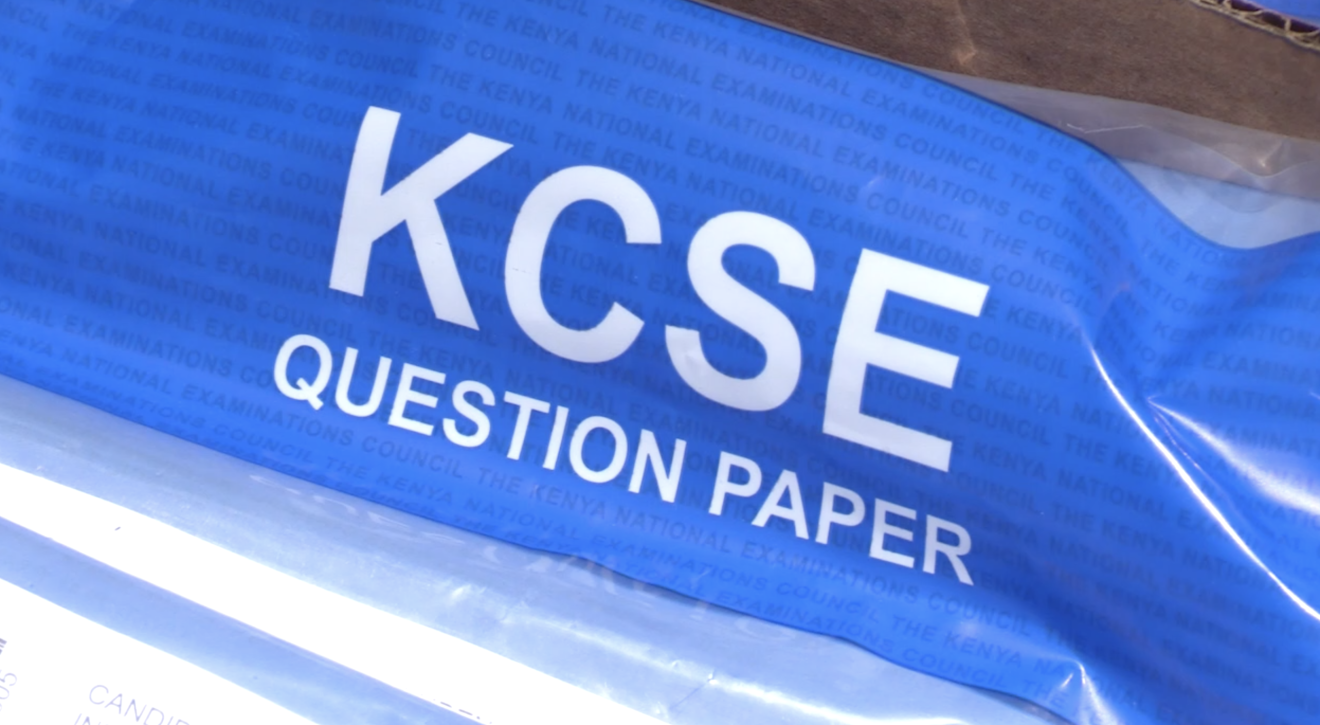

KCSE as a private candidate or a repeater
KCSE
How KNEC registers private candidates and repeaters, and who the qualifying test is for.
Private candidates
The Kenya National Examinations Council (KNEC) provides an examination pathway for learners who are outside the regular secondary school system. Under section 3.2 of the revised KCSE regulations (2024 edition), private candidates register through County or Sub-County Director of Education offices through agents appointed by the Council.
To register under the 2024 regulations, a regular private candidate must provide:
- A Kenya Certificate of Primary Education (KCPE) certificate or an equivalent qualification.
- Proof that at least three years have passed between sitting KCPE and the year of KCSE registration.
- A school-leaving certificate from the last school attended.
- A letter from the head of an institution where practical examinations will be taken.
- For candidates presenting foreign certificates, the original foreign qualification alongside an equation letter from KNEC or proof of having passed the KCSE qualifying test.
The registration circular for the 2026 KCSE (published in February 2026) defines private candidates as individuals not enrolled in a formal school, including repeaters aiming to improve their grades. The circular notes that registration for the 2026 cycle closed on 31 March 2026.
The examination venues for private candidates follow specific administrative arrangements:
- KNEC approves one private examination centre per sub-county.
- The other examination papers are sat at county headquarters, in centres the County Directors of Education identify.
- Projects are handled at sub-county level, in institutions the Sub-County Directors identify.
There is an administrative distinction between the published regulations and the 2026 circular regarding practical placements. The 2024 regulations instruct private candidates to arrange their practical placement independently with the head of an institution offering that subject and present that letter during registration. Conversely, the 2026 registration circular and February 2026 project guidelines state that the Sub-County Director of Education identifies a single public secondary school to host all private candidates taking projects and practicals within that sub-county, communicating that choice directly to KNEC in writing.
On examination days, private candidates must present a national identity card, a birth certificate, or a valid passport to gain entry to the examination room. You are responsible for confirming your registration details well before the examination period, verifying that your subject choices and personal data are correct, and finding the precise locations for both rehearsal day and the main papers. For full details on session timings and timetable rules, review all you should know about the KCSE.
The government exam subsidy applies only to regular school candidates in public and private institutions. Private candidates registered at sub-county centres, non-citizens, and repeaters are required to pay the examination fees set out in the 2026 registration circular via the eCitizen platform. Always verify the current fee structure on the official KNEC portal before making any payment.
Repeaters
Section 3.4 of the 2024 KCSE regulations governs candidates who return to sit the examination again. To qualify as a repeater, you must hold a previous KCSE certificate, an East African Certificate of Education (EACE) or Kenya Certificate of Education (KCE) certificate with at least Division IV, or an equated equivalent. The Council divides repeaters into two distinct categories: full repeaters and partial repeaters.
Full repeat
A full repeat requires you to register for a minimum of seven and a maximum of nine subjects. You must select your subjects in accordance with standard certificate award rules, as explained in our guide on how the KCSE mean grade is calculated.
Key rules for full repeats include:
- Full repeaters receive index numbers in the standard school range from 001 to 499.
- You may repeat the full examination as many times as you choose, regardless of when you first sat KCSE, provided the subjects remain on the active curriculum and were subjects you attempted previously.
- Candidates whose original examination results were cancelled due to irregularities, or who were not graded during their previous attempt, must register as full repeaters taking between seven and nine subjects.
Partial repeat
A partial repeat allows a candidate to register for fewer than seven subjects. This option comes with strict Council limitations:
- You may attempt a partial repeat once only.
- You can only register for subjects you sat in your previous KCSE sitting; you cannot introduce a new subject.
- Partial repeaters are given index numbers ending in 501, 502, and so on.
- KNEC issues a supplementary certificate listing only the subjects sat during the partial repeat.
- The Council does not combine your two examination sittings into a single certificate, nor will it recalculate or issue a revised overall mean grade. You will hold your original certificate alongside your supplementary certificate.
Under the 2026 registration circular, heads of institutions must formally declare all repeaters during the regular registration window. Examination fees for repeaters are not covered by the state education subsidy. Repeaters must pay the examination fee specified in the 2026 circular through eCitizen. Prospective candidates should verify the current fee requirements on the official KNEC portal before paying.
The qualifying test
The KCSE qualifying test assesses whether a candidate without standard local credentials possesses the academic foundation necessary to sit the national examination. Section 3.3 of the 2024 regulations and the June 2026 qualifying test guidelines explain the entry requirements.
Under the 2024 regulations, candidates presenting foreign primary qualifications must have their documents equated by KNEC one year before KCSE registration. If the equation process directs you to sit the qualifying test, you must take and pass this test a full year before applying for KCSE registration.
According to the June 2026 guidelines signed by KNEC Chief Executive Officer Dr David Njengere, the qualifying test was scheduled and administered in September 2026 for prospective candidates aiming to sit the 2027 KCSE. This test was designed for:
- Candidates without a KCPE certificate or equivalent who intended to sit the 2027 KCSE, including learners who missed the 2023 KCPE examination but joined secondary school under Ministry of Education approval. Secondary school heads were required to ensure that eligible Form 3 learners without KCPE sat the September 2026 test.
- Learners holding foreign qualifications who were enrolled in Form 3, following the formal equation of their certificates.
Candidates requiring primary qualification validation were instructed to submit:
- A formal application letter.
- Primary school report cards or certified documentary proof of primary schooling.
- A bank deposit for the validation charge named in the guidelines. The amount is on that document, and it is not repeated here.
These validation materials had to be submitted in person to the Archives Division, located on the 1st Floor of New Mitihani House, South C, Nairobi.
Once approved for the test, candidate registration required an official introductory letter from the school head (or from the Sub-County Director of Education for adult candidates), the KNEC equation letter, a digital passport photograph, a birth certificate or national identity card, and payment of the qualifying test registration fee via eCitizen. Because fees and calendar dates are adjusted by administrative circulars, candidates must confirm the active rates and instructions on the KNEC portal before making financial commitments. The results from the September 2026 test serve as the academic prerequisite for entry into the 2027 KCSE examination cycle.
After 2027
The June 2026 qualifying-test guidelines say the last KCSE series will be administered in 2027. After that, the same letter says assessments will be administered under the Competency Based Assessment Framework, in line with the Basic Education Curriculum Framework (2017).
- Revised KCSE regulations, 2024 edition
- Registration circular for the 2026 KCSE
- Guidelines on 2026 KCSE group 4 and 5 projects
- Guidelines on the 2026 KCSE qualifying test
Official facts stay on the KCSE guide.